

Rainbow Riches casino Plinko game
Introduction
Plinko has become one of the most talked-about instant-play casino formats because it strips gambling down to a very simple visual idea: drop a ball, watch it bounce through a field of pegs, and see where it lands. On the surface, that looks almost too basic to hold attention for long. In practice, it does the opposite. The combination of speed, visible randomness and adjustable risk creates a session that can feel calm, brutal or surprisingly suspenseful depending on how it is configured. Those comparing loyalty perks can weigh this section against Sweet Bonanza slot guide.
For players browsing Rainbow riches casino, that matters. Plinko is not a slot with reels, paylines, symbols and bonus rounds. It belongs to a different rhythm of play. It is closer to a probability-driven drop game where every round is short, the result is instantly readable and the tension comes from trajectory rather than animation. That difference is exactly why some players take to it immediately, while others try it once and go straight back to slots or blackjack details.
In this guide, I will focus strictly on Rainbow riches casino Plinko as a game page topic: how it works, why it attracts attention, what the risk settings really change, where the appeal comes from, and what a player should understand before placing the first stake. My goal is not to oversell it. It is to explain what this format genuinely offers and where its limits show up in real play.
What Plinko is and why it stands out so quickly
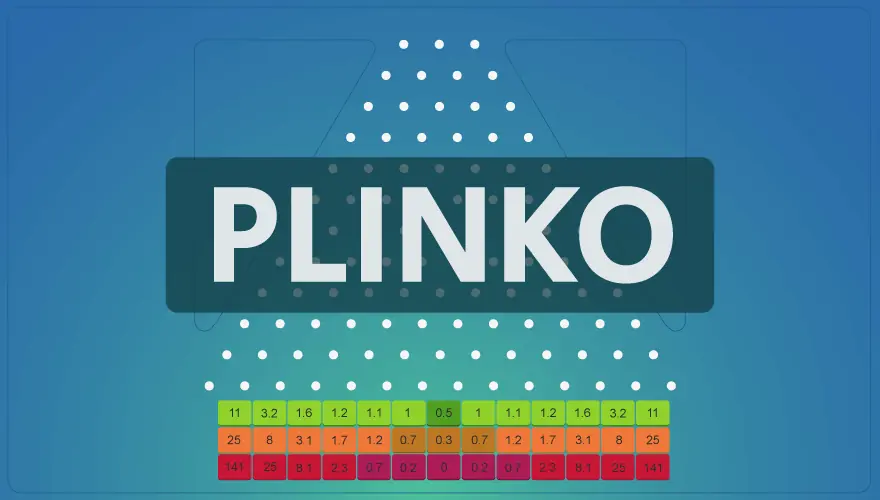
At its core, Plinko is a drop-based gambling game built around a vertical board filled with pins or pegs. A ball is released from the top, it collides with obstacles on the way down, and eventually lands in one of several multiplier slots at the bottom. The multiplier determines the return for that round. That is the whole structure. No reel sets, no card values, no long bonus sequence to wait for.
The reason Plinko became so noticeable is not just simplicity. It is the fact that the simplicity is visible. In many casino games, the random outcome is hidden behind spinning reels, card dealing or a result screen. In Plinko, the path itself becomes part of the experience. Players do not just receive an outcome; they watch the route that appears to lead to it. That visual journey gives the impression of involvement, even though the result is still governed by a random process.
That distinction is important. Plinko often feels more transparent than a slot because the ball physically appears to make its way down the board. But transparency of presentation is not the same as control. The player sees the bounce pattern, yet does not influence it once the drop begins. This is one of the most interesting things about the format: it looks tactile and almost skill-adjacent, but in practical terms it remains a chance-based casino product.
On Rainbow riches casino, Plinko draws attention for another reason as well: it delivers instant feedback. A player does not need to learn paylines, bonus symbols or reel behaviour to understand whether a round paid 0.5x, 2x or 100x. That low barrier to entry makes it easy to try, especially for users who want something quicker and more direct than a traditional slot session.
How the Rainbow riches casino Plinko mechanic actually works
The operating logic of Plinko is straightforward, but the practical implications are not. Before each round, the player normally chooses a stake, selects a risk profile and, in many versions, sets the number of rows on the board. Then the ball is dropped from the top. As it hits peg after peg, it is deflected left or right until it reaches one of the bottom pockets, each tied to a multiplier.
The central slots usually carry lower multipliers and are reached more often. The outer edges tend to hold the largest multipliers, but they are hit far less frequently. This creates the core balance of the game: common modest returns versus rare high-return outcomes. In other words, the whole structure is built around distribution.
Here is a simplified view of the main variables players usually interact with:
| Setting | What it changes | What it means in practice |
|---|---|---|
| Stake size | The amount risked per drop | Directly affects session cost and the value of any multiplier hit |
| Risk level | The multiplier distribution across the board | Higher risk generally means more dead or low-return zones and rarer large hits |
| Rows | The number of bounce decisions before landing | Can alter spread, pacing and the shape of the possible outcome range |
| Auto-play | Runs repeated drops automatically | Speeds up spending and can reduce emotional control during volatile stretches |
The movement of the ball is what gives Plinko its identity. Every peg collision creates a left or right deflection, and over many rounds this produces a pattern where middle outcomes appear much more often than edge outcomes. If that sounds familiar, it is because the board behaves a bit like a visual probability funnel. The dramatic multipliers sit on the extremes, but the game naturally channels many drops toward the centre.
This is one of the easiest mistakes new players make: they see the large multipliers displayed at the bottom and mentally treat them as realistic targets in the short term. In reality, those values are often there to define the top end of the model, not the expected rhythm of ordinary play. The board advertises possibility, but the session is usually built on repetition and many smaller results.
Why the game feels engaging and how its tempo works in a real session
Plinko has a very specific pace. Each round is short, readable and self-contained. There is no waiting for a feature trigger, no need to track symbol combinations, and no long setup phase. That creates a fast loop: choose settings, drop, watch, result, repeat. For some players, that loop is exactly the appeal. It cuts away almost everything except anticipation.
What keeps the tension alive is the brief moment between release and landing. The ball can appear to be heading toward a high multiplier, then drift inward at the last second. That tiny swing in expectation is where much of the emotional pull comes from. It is not a long-form build-up like a slot bonus round. It is a compact burst of suspense repeated dozens of times.
I think this is one of the clearest observations about Plinko: it turns micro-disappointment and micro-hope into the main entertainment loop. A near miss on the edge can feel more memorable than an ordinary central return, even though the actual result may not justify the emotional reaction. That is part of why sessions can become sticky without looking complex.
The tempo also changes dramatically depending on whether the player uses manual drops or auto-play. Manual play gives more breathing room between decisions. Auto-play compresses everything. In a high-risk setup, that can turn a session from controlled experimentation into a rapid sequence of losing rounds punctuated by occasional spikes. The game itself has not changed, but the player’s perception of it has.
Risk levels, board logic and what they really change for the player
Risk settings are one of the defining parts of Plinko. In most versions, low, medium and high risk do not simply alter how often the ball lands in certain areas. They reshape the multiplier map at the bottom. A low-risk board usually offers more moderate returns and fewer dramatic gaps. A high-risk board often includes more punishing low-value pockets and a much steeper jump to the top-end multipliers.
That matters because players sometimes assume higher risk just means “more exciting.” In truth, it often means a harsher baseline. The game may produce long stretches of poor outcomes before a notable hit appears, if it appears at all during that session. A high-risk setup can feel thrilling when it connects, but it can also feel empty very quickly if the bankroll is not built for that variance.
The number of rows adds another layer. More rows generally mean more bounce events before the ball lands, which can widen the shape of possible outcomes and make the rare edge pockets feel even more distant. Fewer rows tend to make the board easier to read visually, but they do not remove the core uncertainty. They only express it through a shorter path.
Below is a practical comparison of how players often experience different risk profiles:
| Risk profile | Typical session feel | Best suited to |
|---|---|---|
| Low | More stable, less dramatic, fewer extreme swings | Players testing the format or trying to extend playtime |
| Medium | Balanced rhythm with visible swings but not constant punishment | Players who want suspense without fully embracing harsh variance |
| High | Sharp results, long dry patches, occasional standout multipliers | Players who understand short-term volatility and accept quick bankroll movement |
A useful way to think about Rainbowriches casino Plinko is this: the player is not choosing how to win, but how uneven the road to outcomes will be. That is a subtle but important difference. The settings shape the experience of randomness more than they shape the randomness itself.
Probabilities, expected outcomes and the gap between appearance and reality
Plinko looks intuitive because the board is visible. That can create a false sense that outcomes are easier to predict than they really are. Yes, the centre is generally more common than the edges. Yes, the multiplier layout gives clues about where value is concentrated. But none of that gives the player a reliable way to forecast the next drop. If bonuses are what you care about, Rainbow Riches Casino welcome offer help breaks down every offer currently running.
What matters in practice is understanding distribution over time rather than reading meaning into individual paths. One ball drifting close to a top multiplier does not imply another is due. A sequence of weak landings does not guarantee that a large return is coming. Each drop is part of a random model, not a correction system that rewards patience on schedule.
That is where Plinko can mislead inexperienced users. Because the route is animated, players may feel that they are watching a process they can somehow interpret. In reality, the useful information lies in the settings and the payout structure, not in trying to decode bounce patterns after the fact.
If I had to summarise the probability side in practical terms, I would put it this way:
- Small and middling multipliers usually define the everyday session.
- The large edge multipliers are the headline numbers, not the standard outcome pattern.
- Changing risk level alters how painful the ordinary rounds can feel before a bigger return appears.
For bankroll management, that means a player should never build a session plan around hitting the top number. The sensible approach is to assume that the session will mostly be carried by frequent low-end results and that any exceptional multiplier is a bonus, not a target.
How Plinko differs from slots and other casino game formats
The easiest comparison is with classic slots, because that is where many players come from. Slots are built around reels, symbol weighting, bonus triggers, free spins and layered presentation. Their appeal often comes from variation: different themes, bonus structures, expanding symbols, cascading wins or jackpot elements. Plinko removes almost all of that. It is not trying to entertain through narrative or feature depth. It is trying to deliver a pure cycle of stake, suspense and result.
That makes Plinko feel cleaner, but also narrower. A slot can keep a player engaged through anticipation of a feature round even during a run of modest base-game returns. Plinko has no equivalent cushion. The whole experience is exposed. If the drops are not producing satisfying outcomes, there is little else to distract from that fact.
Compared with roulette, Plinko shares the attraction of fast, independent rounds. But roulette is built around explicit bet types and visible odds categories. Plinko is more visual and less analytical on the surface, even though probability still governs everything underneath. Compared with crash-style games, Plinko is less about timing decisions and more about accepting a pre-set random path. Compared with blackjack, there is no strategic layer once the round begins.
This is why Plinko tends to divide audiences quite clearly:
- Players who enjoy stripped-back, fast decision loops often like it immediately.
- Players who want layered gameplay, bonus sequences or tactical choices may find it too one-note.
That does not make it better or worse than other casino games. It just means it serves a different appetite. On Rainbow riches casino, it works best as a deliberate choice for a certain style of session, not as a universal replacement for slots or tables.
Practical strengths and weaker points of the format
Plinko has several genuine strengths. First, it is easy to understand. A new player can grasp the objective in seconds. Second, it provides immediate result clarity. There is no need to interpret paylines or bonus conditions after each round. Third, it allows visible control over session style through risk levels and, where available, row settings. That gives players a more direct way to shape how calm or punishing the session feels.
There is also a less obvious advantage: Plinko makes variance easier to feel. In some slots, the mathematics of a game are hidden behind long animations and multiple small events. In Plinko, the swings are more naked. That can actually help disciplined players recognise what kind of session they are in and adjust faster.
Still, the format has clear limitations. The biggest is repetition. Because the core action never changes, some players experience fatigue quickly. Another issue is that the visual path can create emotional distortion. Near-edge landings look dramatic, but they do not change the fact that the result was still a low or moderate multiplier. The board can make ordinary outcomes feel more significant than they are.
A further concern is speed. Fast rounds plus auto-play can accelerate losses more sharply than players expect, especially on aggressive settings. The game feels harmless because it looks simple, but simplicity can hide how quickly a bankroll is being processed.
One of the most memorable things about Plinko is this contradiction: it is one of the easiest casino games to understand in ten seconds, yet one of the easiest to misread over ten minutes. That is not because the rules are hidden. It is because the presentation feels more interpretable than the underlying randomness really is.
Who Plinko suits and who may be better off elsewhere
In my view, Rainbow riches casino Plinko is best suited to players who want short rounds, visible outcomes and adjustable session intensity without learning a complicated ruleset. It can also appeal to users who are tired of feature-heavy slots and want something more direct. If someone enjoys watching probability play out in a compact visual format, Plinko makes sense. Anyone stuck on account verification can follow the steps laid out in Rainbow Riches Casino withdrawal limits guide for UK players.
It may also suit players who prefer setting their own comfort level before the round begins. A low-risk board with sensible stakes can provide a more measured experience than many people expect from a fast-drop game. That said, the calmer versions still rely on chance and still carry loss potential. They are not safe modes; they are simply less violent in how results are distributed.
On the other hand, players who want strategic influence, deeper progression or richer variety may not stay with Plinko for long. If the fun of gambling comes from bonus rounds, evolving features, card decisions or complex bet structures, this format can feel too thin. Likewise, players who chase big multipliers without accepting the dry spells that come with them are likely to find high-risk Plinko frustrating.
It is also not ideal for people who are highly reactive to near misses. Because the ball visibly approaches premium slots before falling away, the game can intensify the urge to continue even when the actual return pattern is poor. Anyone who knows they are vulnerable to that kind of momentum should approach with more caution or choose a slower format.
What to check before starting a session on Rainbow riches casino
Before launching Plinko, I recommend treating the setup screen as the real decision point. The drop itself is only the execution of choices already made. A few practical checks can make a major difference to how the session feels:
- Look at the risk profile first. Do not pick high risk just because the maximum multiplier looks attractive. Ask whether your bankroll can absorb a sequence of weak returns.
- Keep the stake proportionate. Fast rounds magnify poor stake sizing. A bet that looks small in isolation may become expensive over dozens of drops.
- Use auto-play carefully. It is convenient, but it also removes the pause in which players normally reassess.
- Understand what success means for your session. If you only consider the top multiplier a satisfying result, the format may disappoint you quickly.
- Try to read the payout map, not the animation. The board layout tells you more than any individual bounce path.
If a demo version is available, it can be useful for one reason: not to “crack” the game, but to understand how different risk levels change the emotional rhythm. That is where many players get the clearest answer about whether Plinko suits them. Some discover they like the lower-intensity boards. Others realise very quickly that the format feels too repetitive or too swing-heavy.
Final verdict
Rainbow riches casino Plinko offers a very specific kind of casino experience: fast, visual, probability-driven and stripped of almost everything that usually surrounds a slot. Its key strength is clarity. You know what happens, you see the route, and you understand the result immediately. That makes it accessible and, for the right player, highly engaging.
Its real appeal lies in the way it turns a simple drop into a tension loop. Risk settings, row options and multiplier distribution can make the same board feel measured or punishing, which is why two players can walk away with completely different impressions of the same format. One sees clean, satisfying simplicity. Another sees repetition and sharp bankroll swings.
The caution point is just as clear. Plinko may look harmless because the interface is minimal, but the session speed and variance can be unforgiving, especially on high-risk settings or under auto-play. The visible path of the ball can also create emotional momentum that has little to do with actual value.
So, is it worth trying? Yes, if you want a direct alternative to reels and understand that the excitement comes from distribution, not depth. Plinko is strongest when approached as a quick, focused chance game with adjustable intensity. It is weaker if you expect strategic control, feature-rich progression or steady top-end returns. For players on Rainbow riches casino who want a clean, fast and watchable format, it makes sense. For those who need more layers to stay engaged, a different style of casino game will probably be the better fit.
FAQ
How does Plinko work on the official casino site?
A ball drops from the top and bounces through pegs before landing in a scoring section. The result depends on where the ball ends, with multipliers applied to each landing zone.
Is the demo mode set the same way as real-money play for Plinko?
Demo mode and real-money play follow the same Plinko mechanics, including ball drop outcomes and multipliers. The main difference is the stakes: demo mode uses play money, while real-money play is tied to the player account.
What should a player check to avoid seeing an outdated Plinko game state?
Reload the game lobby if the Plinko table looks frozen or the ball drop controls do not respond. Clearing the browser cache and switching networks can also help if the session is stuck.
Can a bonus or promo code affect Plinko, or is it separate from the base game?
Plinko runs as a standalone casino games table, while bonus offers are subject to their own activation and wagering rules. If a promotion is available, the game may be eligible only under the promotion terms shown in the cashier or offer section.
How does Plinko behave on mobile using the mobile casino app?
The Plinko ball-drop experience is designed for mobile play with tap-based controls. The same demo mode versus real-money selection should be visible, but the table layout may be narrower for smaller screens.
What are common beginner mistakes when playing Plinko multipliers?
Many players misread the scoring zones and focus only on big multipliers, then switch risk levels too quickly. Another frequent mistake is forgetting whether the table is in demo mode or real-money play before starting the next round.
What should be done if the Plinko table keeps showing as unavailable on Rainbow Riches?
Switch between demo mode and real-money play to refresh the session, then re-open the game lobby. If the table still does not start, trying an alternative browser or the casino mobile app can help. Support can assist when access remains blocked due to account status or a temporary technical issue, and they can advise on the next steps shown in account sections.